That
Mission
is to design and build modern transportation systems that are
necessary for the demands of highly efficient transportation
needs both today and for future generations. Our designs include the
lowest carbon
footprint of any transportation system in the world. Most
importantly, the STC systems have
the lowest environmental impact using solar and regenerative
energy
alongside an array of other unique transportation technology
enhancements.
SEE OUR BROCHURE Click here
Karl W. Guenther Sr. - Chief
Executive Officer of STC International,
has been an engineer for
40 years and is an early pioneer in energy efficient high-speed
transit systems. Along with the
STC
team, his passion and
determination to design the most ultra efficient rail system has
taken them over two decades. He is committed to serving the
transportation needs of domestic economies and, most
importantly, solving the new challenges of modern globalization.
What the Wright brothers
brought to aviation, and Ford brought to the automobile arena,
Karl and his collaborative team has given to the
elevated
rail-monorail transit industry. He has moved this technology
to new plateaus and is a leader in the world of energy
conservation advances. Progress on STC can be seen on
MilestonesList Click here
In the
Video from News Clips Titled Getting Started STC
harnesses
extraordinary partnerships.
We continue to build credibility and have thus far gained
Congressional support
through
endorsements by Senator Mike Fasano, California Energy Commissioner Jim
Boyd, Rep. Jay Inslee, Rep. John Larson, Rep. Chris Shays, and we
suspect soon Rep. Ed Markey: Chairman of The
Select Committee
for Energy Independence and Global Warming.
Sky Train
is currently working on energy research through a significant grant from the
Department of Energy to develop our
unique systems with the prestigious
Florida Solar
Energy Center.
The Sky Train
Corp/Museum of Science and Industry initiative
serves both as an exhibition and opportunity for STC to
continually update and streamline technology in our
demonstration, showing the latest, enhanced
technology
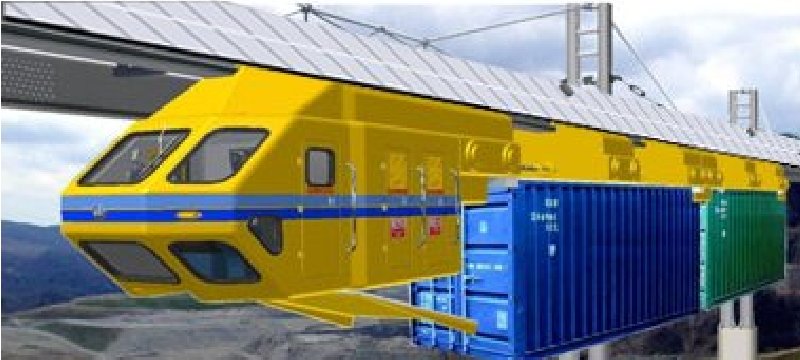
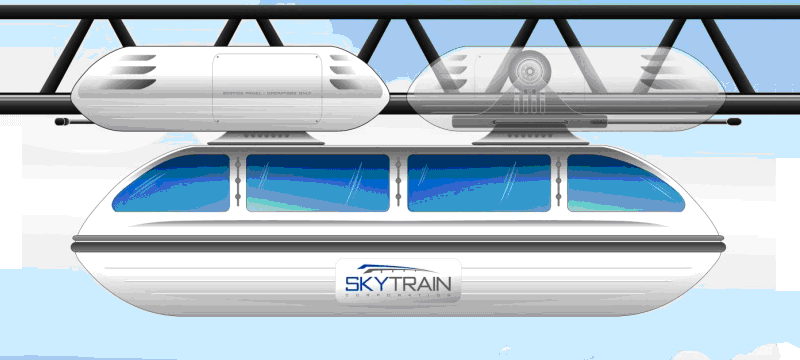
firsts. Sky Train addresses the transportation issues of
tourism, people transporting to and from airports, shipping
ports for rapid and efficient cargo handling. The technology
embraces efficiency because it utilizes a dedicated corridor
that passes above all ground-based traffic. The
future of
transportation is STC's Sky Train and it is now in the
hands of world leaders to create the political landscape that
will enhance public transport technologies such as ours.
STC International has a
multidimensional team, conducting collaborative research and
unique partnerships. We are, Global Builders, working
to create a far better environment for the world and its
future generations. We invite you to join with us and support
our global commitment and mission.

Every
Sky Train project
begins with a comprehensive plan including Transportation
Objectives, Land Use and Energy Concerns.
This illustration on the
left is a view of the major
monorail plan at MOSI a
74-acre site in Tampa, Florida.
Museum of Science and
Industry:
www.mosi.org
See interesting
MOSI statistics!
www.skytraincorp.com/MOSI%20about%20them.pdf
***MOSI's
Long Range Plan envisions a
hotel on the 74-acre site connecting Sky Train with all the
associated Museum facilities. There is also a segment going to
the University of South Florida (USF), which is directly across
the street and to nearby Busch Gardens
Theme Park.
MOSI's short-range goal is to
first connect Sky Train to current facilities in the 74-acre
site, interconnected to a planned hotel that will be accessible
by Sky Train. After this is complete
MOSI plans to extend Sky
Train service to the University of South Florida. USF is a
700-acre campus and is the 6th largest University in
the U.S. After this major connection they plan to expand service
to other major points both north and west.
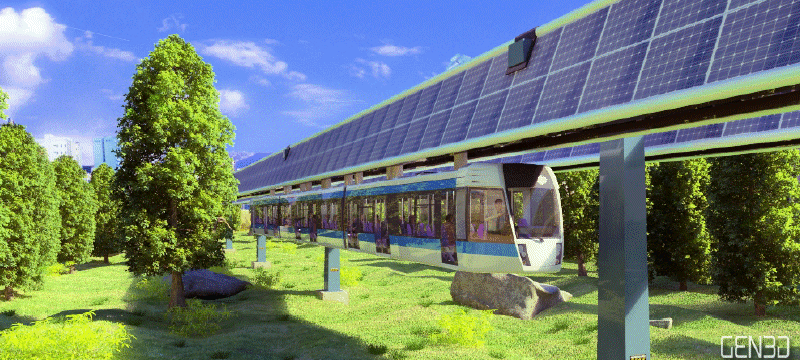
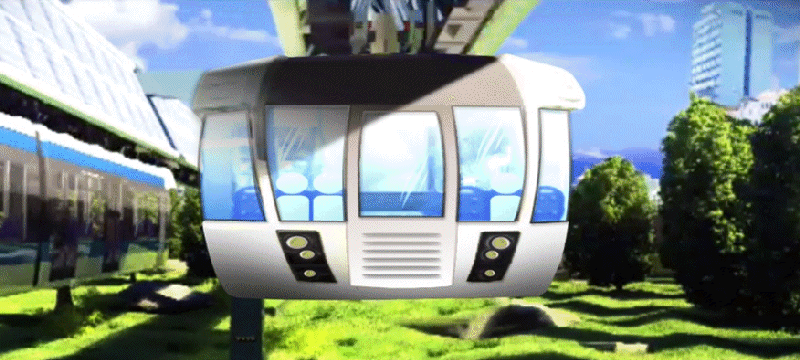
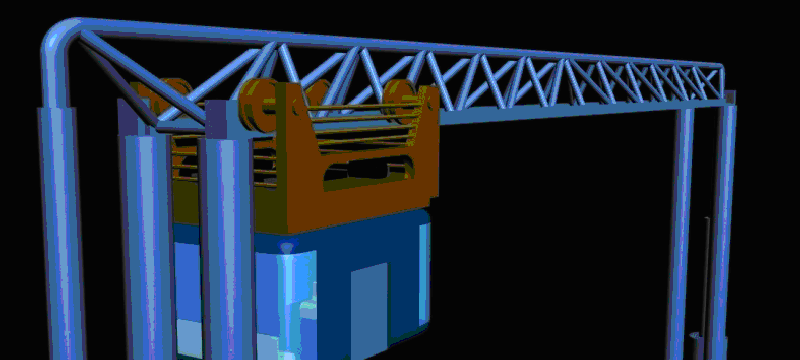
STC’s Sky Train is a
unique transportation system and is undoubtedly
a new visual icon for
the world. Our
monorail enhances rider comfort and viewing of shop displays and
the surrounding landscape.
It is designed to merge with the local architecture and
traditional infrastructure of the location. Interior car
furnishings will be adaptable to accommodate the use of the
local area supply market.
The proprietary development of
Sky Train's
“Mini-Sub-Station”
concept,
(now using
Inductive charging technology), in part, funded through a recent
DOE grant, is completely
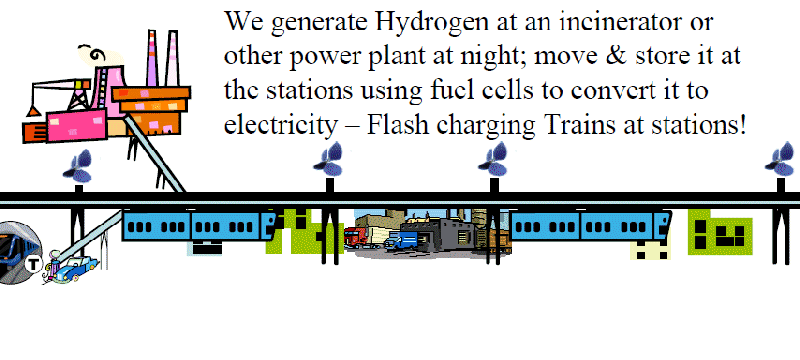
changing power delivery technology for electric vehicles. Low Voltage sources like
Wind Power, Solar Power, and Hydrogen Fuel Cell Power will in the near future load onto state-of–the-art
ultra-capacitors for instant transference to a plug-in
or through inductive-charging type vehicles. These systems
clearly
reduce dependence on fossil fuels and ensure our urban environments remain clean.
Sky Train has figured a way to
dramatically reduce Hydrogen Fuel Cell Stack size, providing
for faster, cheaper, better Sub-stations
and
for shifting fuel cell usage “off-the-streets”. The isolated
platform-based 20-kilowatt (kW) sub-stations alleviate the
threat of crash scenarios and weight problems of fuel cells.
We are also aiming for
40% energy return through Brake
Reclamation. For these reasons our concept, funded by the
Department Of Energy
www.energy.gov
will revolutionize urban transportation systems
within a few years.

Superior Functionality:
STC’s Sky Train transcends
existing ground uses, because it can travel in and out of
buildings as necessary to stop for passenger or freight loading
and unloading. Consequently, STC’s Sky Train is absent from the
usual obstacles such as traffic congestion, drainage ditches
connecting to percolation ponds, and fences dividing properties.
Consequently, there are no vegetation or weed obstructions on
the tracks; this means no herbicides are needed to kill unwanted
vegetation, another environmentally friendly feature of the
Sky
Train.
Note - A final and most important point, building the
STC
system is cost effective. The cost of the
overhead STC system,
ready for operation, is approximately equal to a single lane of
new overhead highway. Most importantly, it can
transport at
least nine times the transportation capacity of one lane
of highway. These costs have a
significantly lower carbon
footprint and price of competing transit systems.